
Contents
Popl Overview: Key Features, Pros & Cons, PricingMobilo OverviewPopl vs Mobilo: 6 Main Differences You Must KnowPopl vs Mobilo: Features Comparison TableWhen to Choose PoplWhen to Choose MobiloWhy DBC: Digital Business Card is a Better Solution Than Popl and Mobilo?ConclusionFAQPopl vs Mobilo (2026): A Detailed Comparison of Digital Business Card Platforms
When you compare Popl and Mobilo, you probably hesitate about which platform is the better fit for your networking and which one delivers the best value for your money.
That’s the right business thinking, because choosing a digital business card partner affects how your team networks and how your company evolves.
In this article, you will find a detailed overview of each platform, including key features, pros and cons, pricing, and the most important business differences between Popl and Mobilo, so you can make the right choice for your team.
Read on to see the best use cases for each platform, what you get (and don’t get) with Popl and Mobilo, and how to avoid paying for features your team will not even use.
3...2...1... Let’s fight begin!
Popl Overview: Key Features, Pros & Cons, Pricing
Popl is one of the best-known digital business card platforms today. It started as an NFC tool for fast contact sharing but has grown into a networking product for teams and sales.
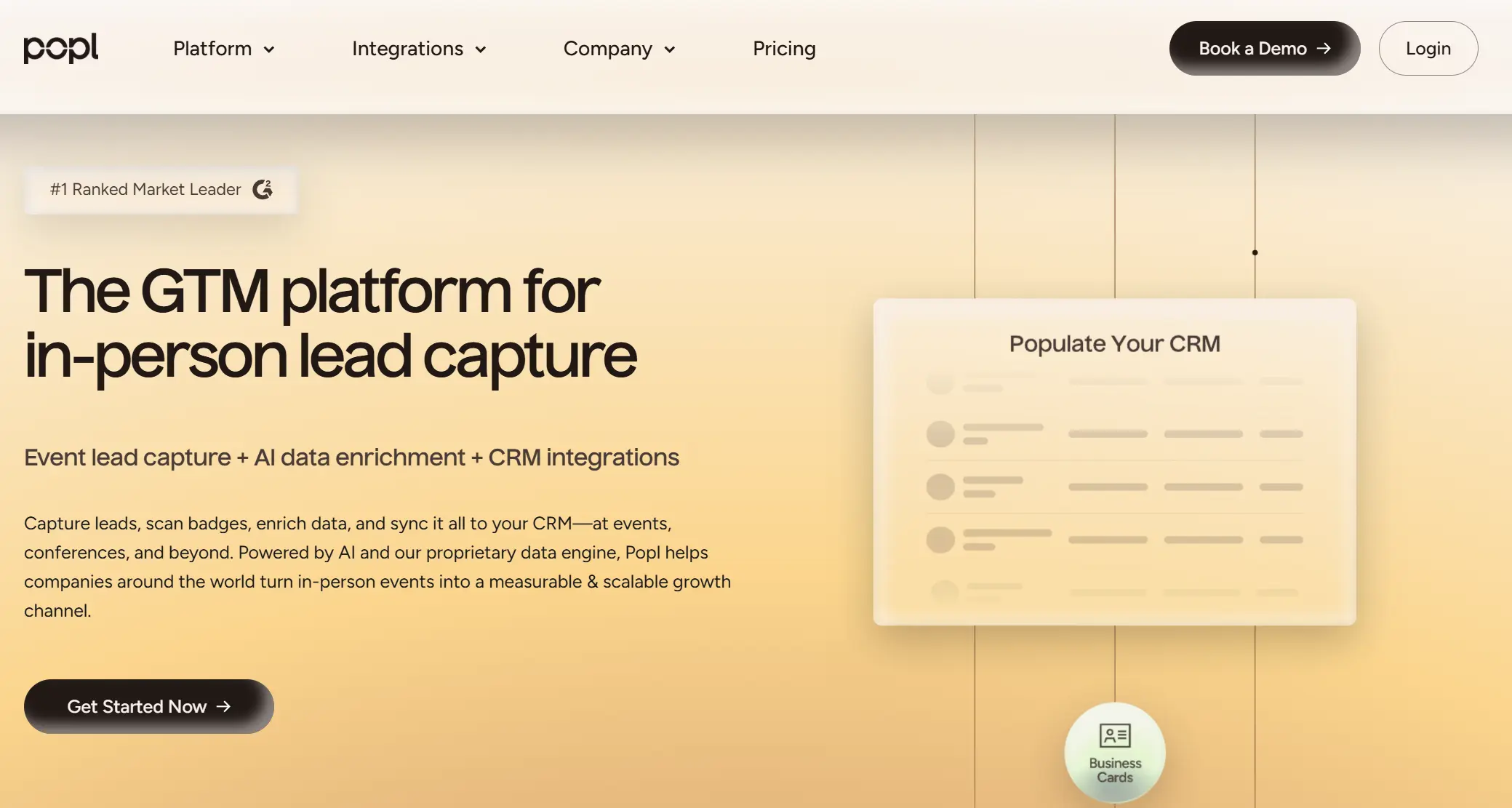
Popl focuses on lead capture and event workflows. The platform offers features such as badge and business card scanning, lead forms, CRM syncing, follow-up automation, and team analytics. The core idea is that when someone on your team meets a new contact, Popl should help you capture the data, push it into your CRM, and track results.
Popl is a good fit for teams that attend conferences, run events, or actively generate leads through networking. If you want to connect your reps’ activity to CRM pipelines and track their performance, Popl is designed for that.
If you only need a digital business card for everyday use, Popl can be more expensive and complex than necessary, since many of its high-level tools are tied to paid plans.
Key Features:
Here are the most important Popl features you need to understand.
1) Event Lead Capture
Popl’s strongest focus is event networking. It offers badge and business card scanning, so you can capture leads quickly without manually entering contact details. This matters for solo professionals who attend conferences regularly, and it matters even more for teams because it standardizes how leads are collected across the team.
2) Lead Forms and Qualifiers
Popl allows you to collect leads through forms and add qualifiers during capture. Instead of just sharing a card, you can guide the interaction toward structured lead data. For sales teams, this is useful because it creates CRM entries and helps prioritize follow-ups.
3) CRM Syncing
Popl positions CRM syncing as a core part of the platform. The main value is that captured leads can be sent directly into tools like HubSpot and Salesforce. For teams, this decreases manual work and helps avoid losing leads after events.
4) Contact Enrichment
Popl promotes its scanner as AI-powered and highlights enrichment as part of the process. The goal is to reduce the number of incomplete leads, which is a common problem after conferences. This feature is especially relevant for teams because incomplete leads rarely turn into real follow-ups.
5) Follow-Up Automation
Popl includes follow-up automation that helps teams reduce the time between meeting someone and contacting them. For solo users, it works as a personal system to sustain consistency. For sales teams, it is part of turning networking into a repeatable activity.
6) Team Management
Popl supports team rollouts through an admin dashboard, templates, bulk onboarding, and control over what team members can edit. This matters for companies that want consistent branding and don’t want every rep building their card differently.
7) Team Analytics and Event Reporting
Popl shows how networking performs across reps and events. For teams, this is one of the main reasons to pay for Popl, because it turns event activity into analyzable data.
8) Enterprise Setup
Popl supports enterprise onboarding features, including SSO and identity management. This is mainly relevant for larger organizations that need centralized access control, structured rollouts, and compliance workflows.
Pros & Cons:
Pros ✅ | Cons ❌ |
|---|---|
Strong event lead capture with badge and business card scanning | Many key features are locked behind paid plans |
Built around CRM syncing and sales workflows | Can get expensive for teams when scaling |
Good for conferences: structured lead forms + qualifiers | More complex than needed for simple daily sharing |
Team admin tools (templates, onboarding, field controls) | Some workflows depend on hardware (tags/cards) |
Reporting focused on reps, events, and performance | Scanning quality and NFC behavior can vary by phone/case |
Wide integration ecosystem (native + Zapier) | Some advanced features require higher tiers or custom pricing |
Pricing:
Popl uses a free model for individuals, with paid tiers that unlock contact capture, scanning, CRM syncing, and team workflows.
Individuals- Free (share-only).
- Pro starts at $6.49 per user/month (billed annually).
- Pro+ starts at $11.99 per user/month (billed annually).
- Custom pricing (quote-based)
- Typically combines per-user seats plus usage-based charges for event lead capture.
- Popl NFC tags/cards are sold separately, typically for $15–$30.
- Hardware is not a subscription, but it is often part of the setup.
Popl Annual Team Cost
Assumes all team members are on Popl Pro ($6.49 per user per month, billed annually) with contact capture and CRM features enabled.
Team Size | Annual Cost (USD) |
|---|---|
1 user | $77.88/year |
5 users | $389.40/year |
10 users | $778.80/year |
25 users | $1,947.00/year |
50 users | $3,894.00/year |
100 users | $7,788.00/year |
- Popl’s Free plan is $0 but does not include lead capture, scanning, CRM syncing, or team features.
- Pro plan ($6.49/mo) unlocks capturing/receiving contacts, scanning, and CRM workflows — this is the plan assumed in the table.
- Popl also offers Pro+ ($11.99/mo) and custom Teams/Enterprise pricing for larger organizations. They can substantially increase annual costs, depending on the negotiated features and usage.
💰 Check our Popl Pricing article, where you will find a full breakdown of each plan and discover all pitfalls for B2B teams.
Mobilo Overview
Mobilo builds its product around a physical NFC business card that links to a digital profile. Instead of pushing a mobile-first lead capture system, Mobilo focuses on branded hardware, team adoption, and controlled company rollouts.
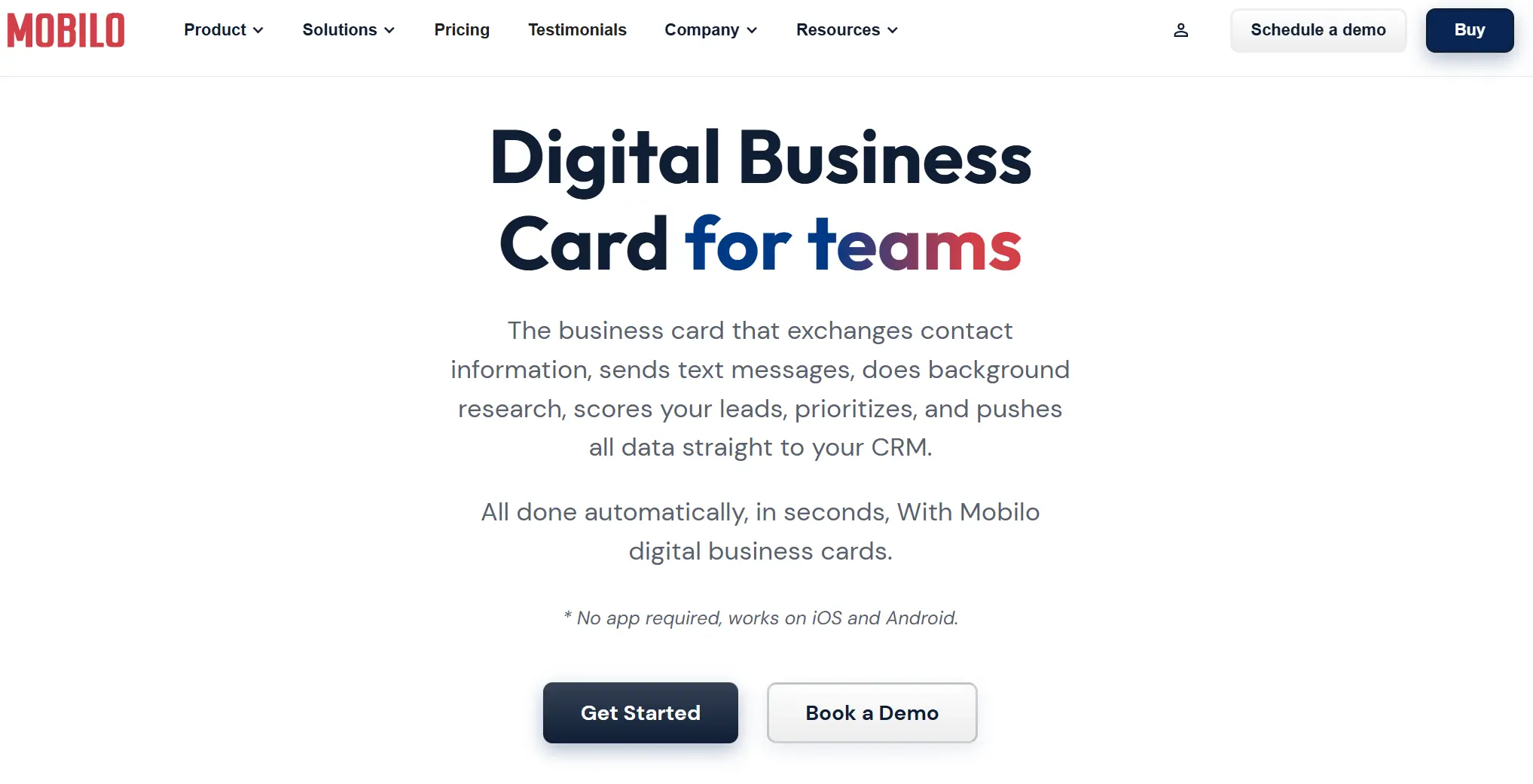
Mobilo targets teams that want consistent networking across the organization. The platform lets companies issue branded cards, centrally manage profiles, and control what employees can share. It also supports CRM syncing, lead-capture modes, and basic analytics, so teams can track activity without turning networking into a complex system.
If your company wants every employee to carry a professional card, share it instantly, and keep profiles aligned with corporate rules, Mobilo supports that workflow well.
If you need advanced event lead capture, deep reporting, and automation follow-ups, Mobilo can feel limited compared to platforms built specifically for sales lead generation.
Key Features:
1) Fully Branded Physical NFC CardsMobilo lets companies issue custom-designed NFC cards in plastic, wood, or metal. Teams use this to keep every rep’s card consistent with brand guidelines and to create a more premium impression during in-person networking.
2) Branded Digital Profile PagesMobilo gives each user a customizable landing page to share contact details, links, and business info. Teams can standardize these profiles across the company and keep them aligned with corporate branding.
3) Lead Capture ModesMobilo offers different modes depending on the situation. Users can share a customized profile, switch to lead-generation mode for structured capture, or use business card mode for fast contact exchange. Such flexibility helps teams adapt to different event formats.
4) Offline Lead CaptureMobilo allows you to capture leads offline and sync them later. This helps teams avoid losing contact at conferences where Wi-Fi and mobile internet are bad.
5) CRM IntegrationsMobilo connects with CRMs like Salesforce, HubSpot, and Pipedrive and expands integrations through Zapier. Teams use this to push leads into their pipeline without manual data entry.
6) Contact EnrichmentMobilo enriches leads with public data to reduce missing fields. Teams benefit because richer lead records increase follow-up quality and reduce time spent cleaning CRM entries.
7) Admin ControlMobilo gives teams a centralized console where admins can upload users in bulk, apply templates, set permissions, and restrict personal links. Companies use this to enforce governance and keep profiles aligned with company policy.
8) Enterprise SecurityMobilo supports enterprise onboarding with SSO options like Azure AD and Okta. It also highlights compliance and enterprise readiness, including support availability and structured rollouts for large organizations.
Pros & Cons:
Pros ✅ | Cons ❌ |
|---|---|
Gives teams premium physical cards with full branding control | Adds cost because teams pay seat fees plus card purchases |
Helps companies drive adoption through a tangible card format | Offers fewer lead-generation tools than event-focused platforms |
Supports offline capture and lead enrichment | Some users report a confusing setup and a multi-app experience |
Provides team governance with templates and permissions | Doesn’t offer the same depth of analytics and automation |
Keeps seat pricing predictable with no per-scan charges | Some reviews mention slow support or pricing changes |
Pricing:
Mobilo lets individuals start with a free digital wallet card, then charges teams a flat per-seat fee for management and lead workflows.
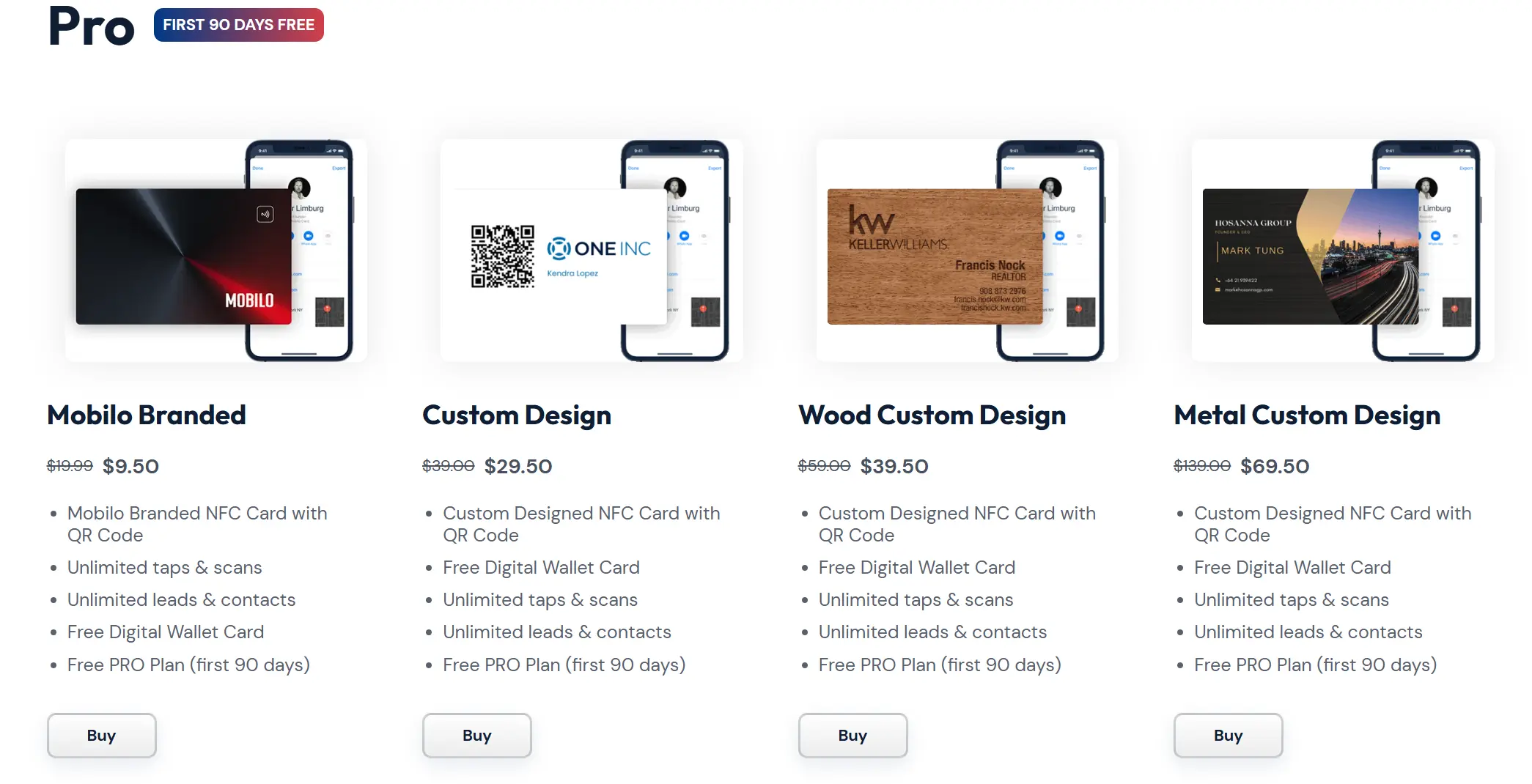
- Free Digital Wallet Card (no monthly fee).
- Physical cards are sold separately and priced by material and customization.
- $4 per user/month.
- Includes digital wallet cards.
- Avoids per-scan event pricing.
- Mobilo sells physical NFC cards separately.
- Card pricing varies by material (plastic, wood, or metal) and customizing options.
Assumes the team pays $4 per user/month.
Team Size | Annual Cost (USD) |
|---|---|
1 user | $48/year |
5 users | $240/year |
10 users | $480/year |
25 users | $1,200/year |
50 users | $2,400/year |
100 users | $4,800/year |
- Mobilo lets individuals start with a free digital wallet card to test the platform without paying.
- Mobilo charges teams $4/user/month, which keeps costs predictable as the company scales.
- Mobilo sells physical NFC cards separately, so the total cost depends on the material and the number of cards a company orders.
- Mobilo avoids per-scan charges, which many teams prefer for conference workflows.
Popl vs Mobilo: 6 Main Differences You Must Know
To make the choice easier, I broke down the most important differences between Popl and Mobilo. These are the points that matter most when you choose a platform for your team, events, or sales workflow.
1. Popl and Mobilo Target Different Workflows
Popl builds its platform around lead capture and sales performance. It pushes scanning, CRM syncing, follow-up automation, and reporting that help teams measure networking results.
Mobilo builds its platform around branded cards and team rollout. It focuses on adoption, consistent presentation, and centralized control.
2. Popl Builds for Conferences, Mobilo Builds for Branded Sharing
Popl treats conferences as the main use case. It promotes badge scanning, business card scanning, lead forms, enrichment, and workflows that help reps capture and qualify leads fast.
Mobilo supports event sharing too, but it does not build the same conference stack. It relies more on NFC taps, QR scans, manual entry, and lead-gen mode to collect data.
3. Mobilo Puts the Physical Card at the Center
Popl sells NFC accessories, but it keeps the product mobile-first. Most users treat Popl as a digital platform and use hardware as an add-on.
Mobilo offers branded cards, employees carry them, and the card becomes the main networking tool.
4. Mobilo Prioritizes Governance, Popl Prioritizes Reporting
Mobilo gives admins a centralized console that supports bulk user uploads, templates, permissions, and profile restrictions. Teams use these controls to enforce company rules and prevent inconsistent profile setups.
Popl also supports team management and enterprise onboarding, but it puts more emphasis on performance reporting and activity recording across reps and events.
5. Popl Pushes Automation, Mobilo Stays More Operational
Popl positions CRM syncing and automation as a major value. It encourages teams to connect lead capture directly to sales workflows, follow-up sequences, and integrations across tools.
Mobilo also syncs leads to CRMs and supports integrations, but it focuses more on reliable capture and delivery.
6. Mobilo Keeps Pricing More Predictable for Teams
Popl keeps individual pricing transparent, but team and event pricing are more complex. Popl often ties event workflows to usage-based pricing, especially when you need scanning.
Mobilo offers a fixed per-user fee and avoids per-scan event charges, although Mobilo adds hardware costs if you want physical cards.
Popl vs Mobilo: Features Comparison Table
Feature | Popl | Mobilo |
|---|---|---|
Best Use Case | Event lead capture + sales workflows | Branded cards + team rollout |
Sharing (No App Needed) | ✅ Yes | ✅ Yes |
Lead Forms & Qualification | ✅ Built-in | ⚠️ Limited / mode-based |
Badge/Card Scanning | ✅ Strong focus (event-first) | ⚠️ More basic capture approach |
Offline Lead Capture | ✅ Yes | ✅ Yes |
Lead Enrichment | ✅ Yes | ✅ Yes |
CRM Syncing | ✅ Yes | ✅ Yes |
Follow-Up Automation | ✅ Built-in | ❌ Not built-in (CRM-driven) |
Team Admin & Governance | ✅ Yes (templates, controls, SSO options) | ✅ Yes (strong rollout + control) |
Analytics & Reporting | ✅ Strong event + team reporting | ✅ Solid activity tracking, less event-focused |
Hardware Strategy | Accessories + tags, mobile-first | Physical card, premium materials |
Hardware Customization | ⚠️ Limited compared to Mobilo | ✅ Strong (plastic/wood/metal designs) |
Pricing Style for Teams | ⚠️ Can get complex (team/event layers) | ✅ Flat seat pricing |
When to Choose Popl
Use Popl when:- You attend conferences, trade shows, and high-volume events, and want a platform built around lead capture.
- You need badge scanning and business card scanning as part of your workflow, especially when you want to move fast and avoid manual entry.
- You want structured lead qualification, including lead forms, fields, and tagging that help reps capture the right data during the interaction.
- You care about event ROI and team performance reporting.
- You want an instant CRM handoff, so leads go directly into HubSpot, Salesforce, or your automation stack without cleanup.
- You run a sales or marketing team and need repeatable event workflows, in which reps capture leads the same way.
- You want a platform that supports automation and follow-up so contacts do not sit in a list without action.
- You accept that Popl can cost more, because you pay for event features that most simple digital card tools do not offer.
When to Choose Mobilo
Use Mobilo when:- You want your team to carry branded physical NFC cards that look professional and feel consistent across the organization.
- You prioritize brand control and governance, including templates, restrictions, and admin tools that prevent inconsistent profiles.
- You want a system that drives adoption through simple sharing, where the card does the work and employees do not need to learn a complex platform.
- You prefer predictable seat pricing and want to avoid event models that charge based on scanning volume.
- You need a solution that supports offline capture and global sharing, especially for teams that travel or work in venues with weak internet.
- You want a platform that still supports CRM syncing and lead delivery, but you do not need a heavy automation layer inside the app.
- You care about premium presentation, especially if your team represents the brand in enterprise meetings, partnerships, or executive networking.
Why DBC: Digital Business Card is a Better Solution Than Popl and Mobilo?
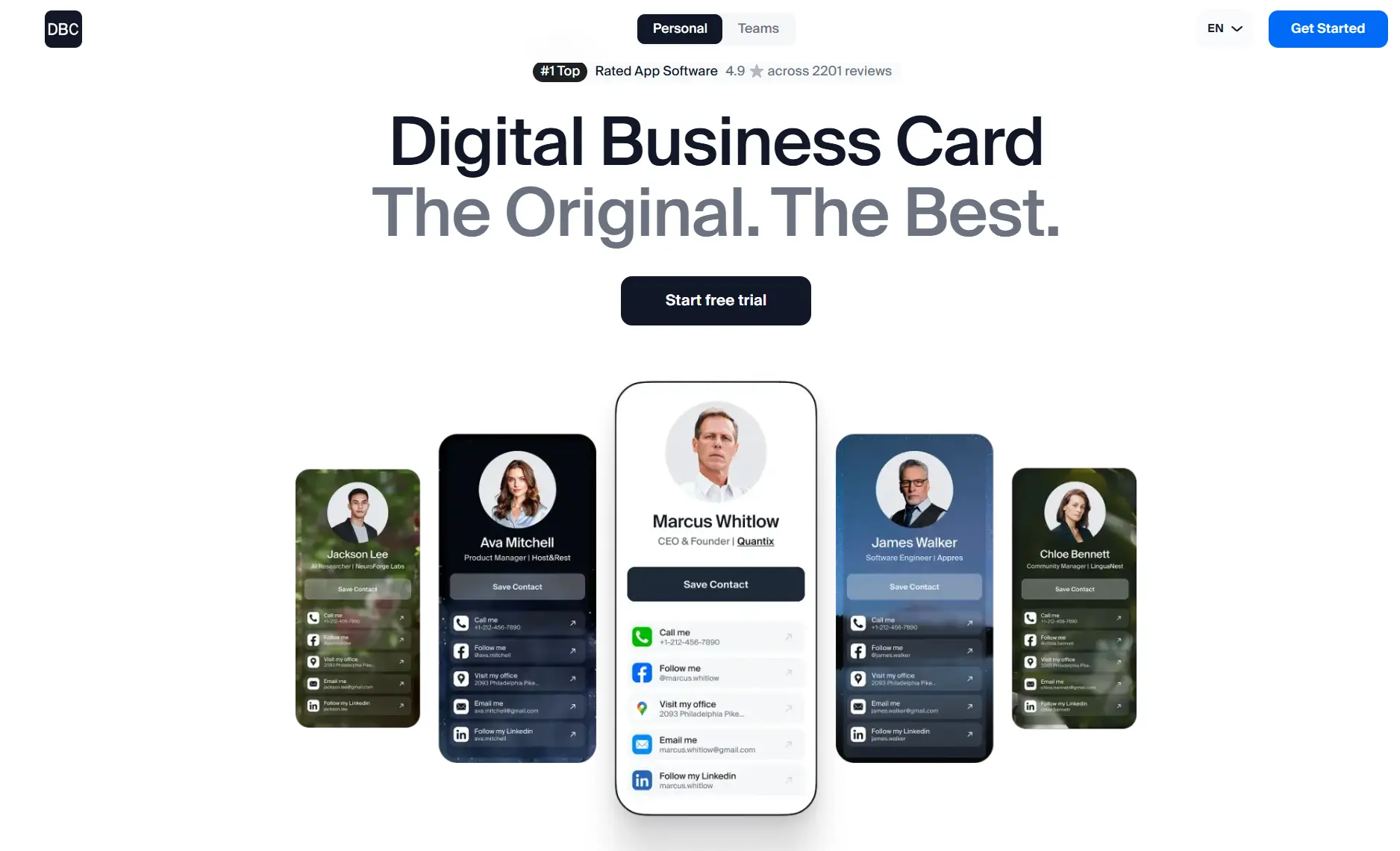
Because DBC: Digital Business Card removes the biggest limitations of Popl and Mobilo and delivers better value for the price. Here are certain areas where DBC outperforms Popl and Mobilo:
1. DBC Doesn’t Charge More When You Scale
Popl and Mobilo structure their plans in ways that often make you pay extra on top of the subscription. You start with a plan, but once your team scales or you need advanced features, you often face additional costs.
DBC doesn’t work like this. We designed our platform to give companies everything they need for business networking in one plan, including lead capture, AI scanning, and event performance tracking.
With the Business plan starting at $4.99 per user/month (billed annually), you get what Popl and similar platforms hide behind usage-based fees or add-ons.
2. DBC Feels Easier to Use
Many users in reviews say that Popl and Mobilo feel complex for everyday use. They work for specific workflows, but they often require extra steps before a user can create their first card.
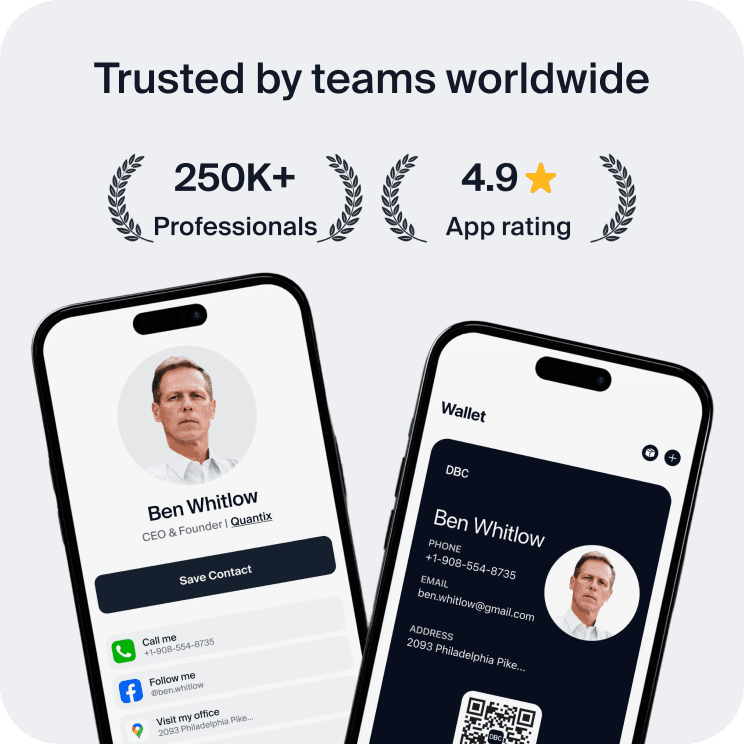
At DBC, we designed the UX so that anyone can open the app and create a unique digital business card in under 60 seconds. Once it’s ready, you can immediately share it, add it to Apple Wallet or Google Wallet, and replace your old business card without wasting time.
3. DBC Has Consistent AI-Scanning Across Devices
At events, NFC doesn’t always work the way you expect. A phone case blocks the tap, NFC is turned off, or a device needs another system update. Your teammate loses a few seconds, and sometimes that costs you the lead.
That’s why we invested heavily in DBC’s AI scanner. Your team can scan badges and paper business cards the same way on any phone. The scanner detects key information like name, company, role, email, and phone, then saves it in a structured format. You or your team stop wasting time reworking data after the event.
4. DBC Onboards Large Teams Fast
Popl is powerful, but it feels heavy for teams that want a fast rollout. Mobilo simplifies adoption by pushing physical cards, but it requires ordering, distribution, and hardware management to access all product benefits.
The moment you enter the DBC: Digital Business Card admin workspace, you can start creating cards for employees right away. You invite teammates by email, they accept the invite, and their card is already there when they log in.
Additionally, you can better onboard new colleagues, offboard employees who leave, and keep full control over company cards without turning it into a manual project.
5. DBC Shows Who Brings ROI From Events
DBC’s biggest fans are active networkers who regularly attend conferences, events, and business meetings.
It’s because we understand how much companies invest in travel, tickets, and time, and how hard it is to measure whether that investment was actually worth it.
Our Event ROI Tracking connects leads to a specific event, assigns them to team members, and tracks results in one place. We want you to see who performs well and who needs some help with their job.
6. DBC Always Has Your Back
If you have any issues or questions, our team is available 24/7 to help you resolve the ticket quickly. We stay close to our customers and keep improving the product based on feedback from teams using it every day.
Conclusion
If you're choosing between Popl and Mobilo, I recommend looking at the conceptual differences between the two.
Popl gives you a strong event toolkit, but it also comes with an overloaded interface and more pricing layers once you move beyond basic use. Mobilo builds its platform around premium physical NFC cards.
Which platform matches your style closely enough that you are ready to accept the trade-offs? Or maybe the right choice is the one that removes those trade-offs.
Pay attention to our DBC: Digital Business Card for Companies page. Here you will learn how DBC works conceptually differently from platforms like Popl and Mobilo, and why enterprise companies choose it for more controlled networking.
Thank you for reading, and good luck with your networking.
FAQ
Popl vs Mobilo: which platform works better for enterprise teams?
Mobilo vs Popl: which solution is more cost-effective at scale?
What is the main difference between Popl and Mobilo for B2B workflows?
What do teams complain about most when using Popl or Mobilo?
Is DBC: Digital Business Card a better alternative to Popl vs Mobilo for B2B teams?

A content writer with over 8 years of experience creating analytical content for digital products and B2B SaaS companies. His work focuses on practical guides, pricing breakdowns, and comparisons that help teams evaluate costs, features, and differences between tools.
Your first impression decides everything
- Look professional and build trust instantly
- Forget about reprints and lost contacts
- Update your details anytime
 Get Started Today