
Contents
Popl OverviewWhy People Look for Popl AlternativesPopl Alternatives: Quick ComparisonHow I Chose These Popl Alternatives1. DBC: Digital Business Card - The Best Popl Alternative2. Blinq3. Tapt4. HiHello5. Wave6. V1CEWhich Popl Alternative Is Best for You?Final WordFAQThe 6 Best Popl Alternatives for Companies and Individuals in 2026
If you’re using Popl today, you already understand why digital business cards replaced paper ones. The problem usually starts when the tool you picked for fast connections becomes more overwhelming than the job it’s supposed to do.
During my preparation for this article, I noticed a common pattern around Popl. It works well as a first step in networking, but basic features often sit behind a paywall, and an app that was supposed to simplify networking starts adding extra steps exactly when timing matters most. This is the moment when professionals and teams begin to question whether Popl still fits their way of working.
In this guide, I’ll break down the best Popl alternatives in 2026 and help you select the one that resonates most with your style. I’ll explain why some individuals and companies are switching away from Popl, what each alternative offers, and which option is the perfect match for different use cases.
Read on to get a practical decision document you can use to choose the right digital business card platform for yourself or your team.
Popl Overview
Popl is a mass-market digital business card and lead-capture platform built for in-person networking. The company became widely known for popularizing NFC business cards and turning a simple tap or scan into a full contact exchange.
Popl’s mission is to help solo professionals and large enterprise teams capture leads at events, track interactions, and measure networking ROI.
In my opinion, their force lies in a broad ecosystem of NFC products, mobile and web tools, scanning features, and CRM connections in one place.
Popl presents its platform through a set of products on its website, each built to support a different networking situation. Let’s take a closer look at each of them.
Event Lead Capture
Popl’s flagship offer is event lead capture that helps your team instantly capture leads, validated contact info, sync it to your CRM, book a meeting, and send a personalized follow-up in seconds.
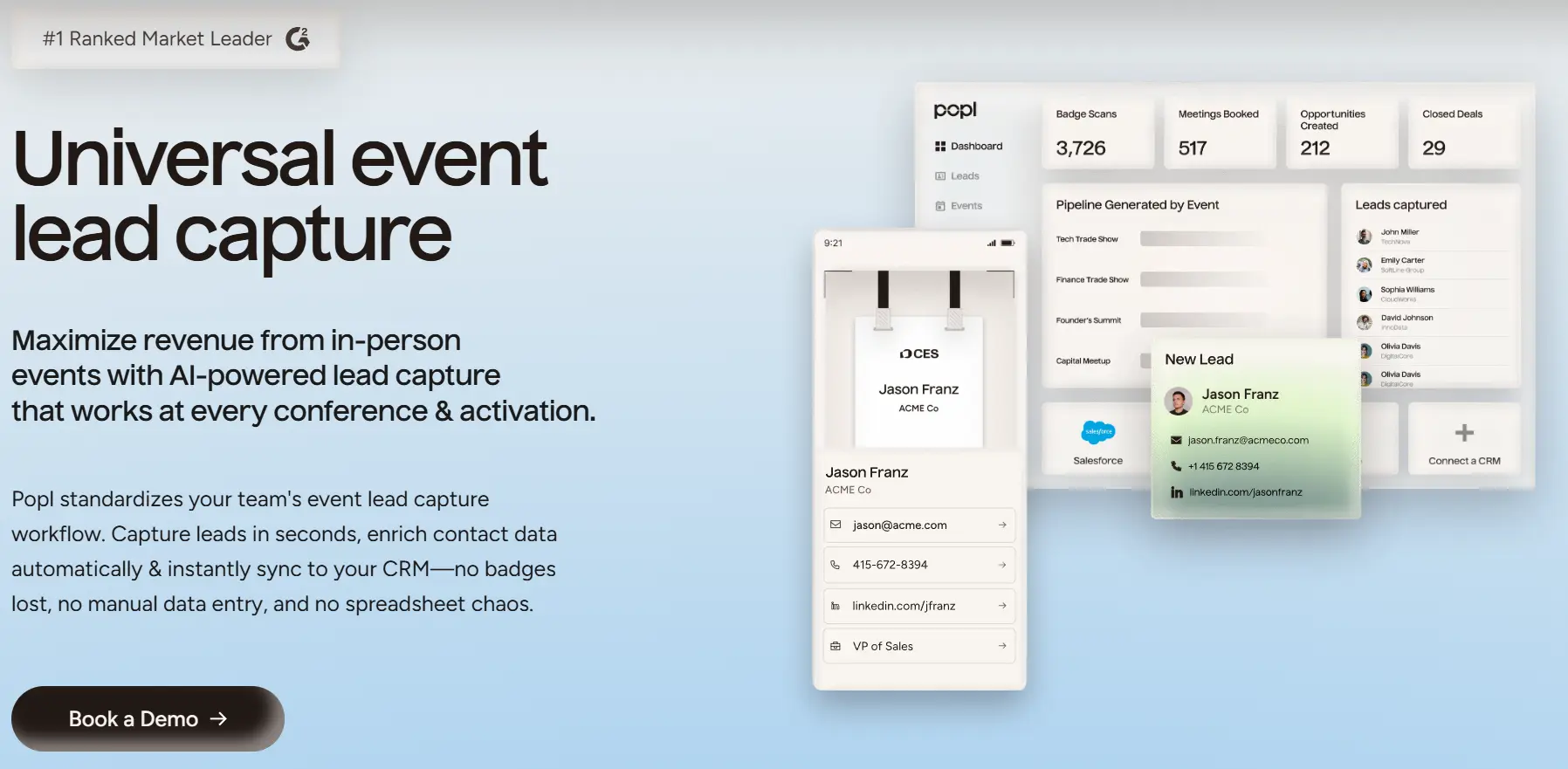
Universal Badge and Paper Card Scanner
Popl’s Universal Badge Scanner turns every badge scan into a CRM-ready contact in seconds. When a team member scans a badge, Popl automatically enriches the lead using Popl AI and its proprietary data engine, which pulls data from 20+ external sources.
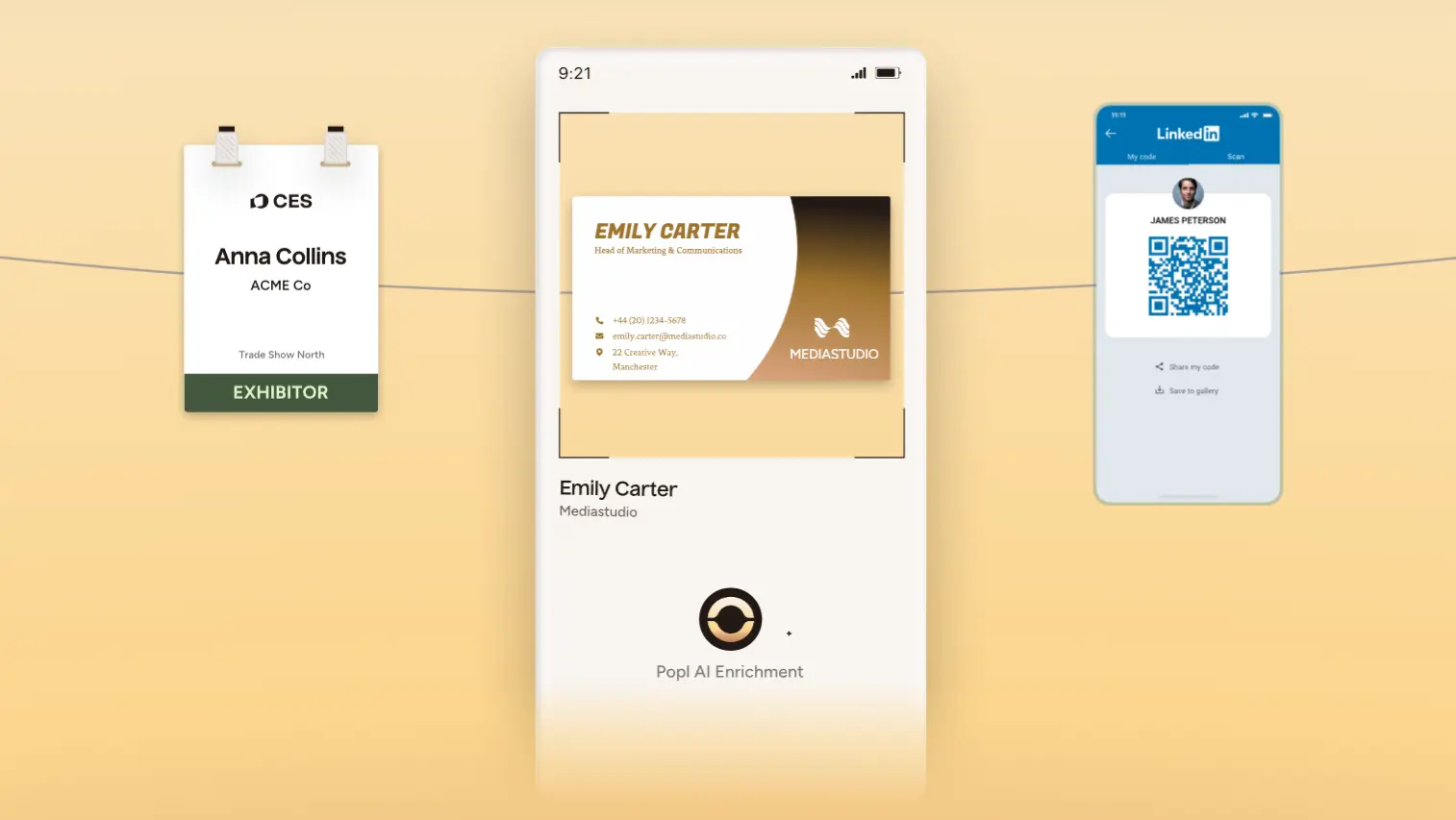
The platform validates emails and phone numbers, adds job titles, LinkedIn profiles, and detailed company information, and sends the enriched contact straight into the CRM.
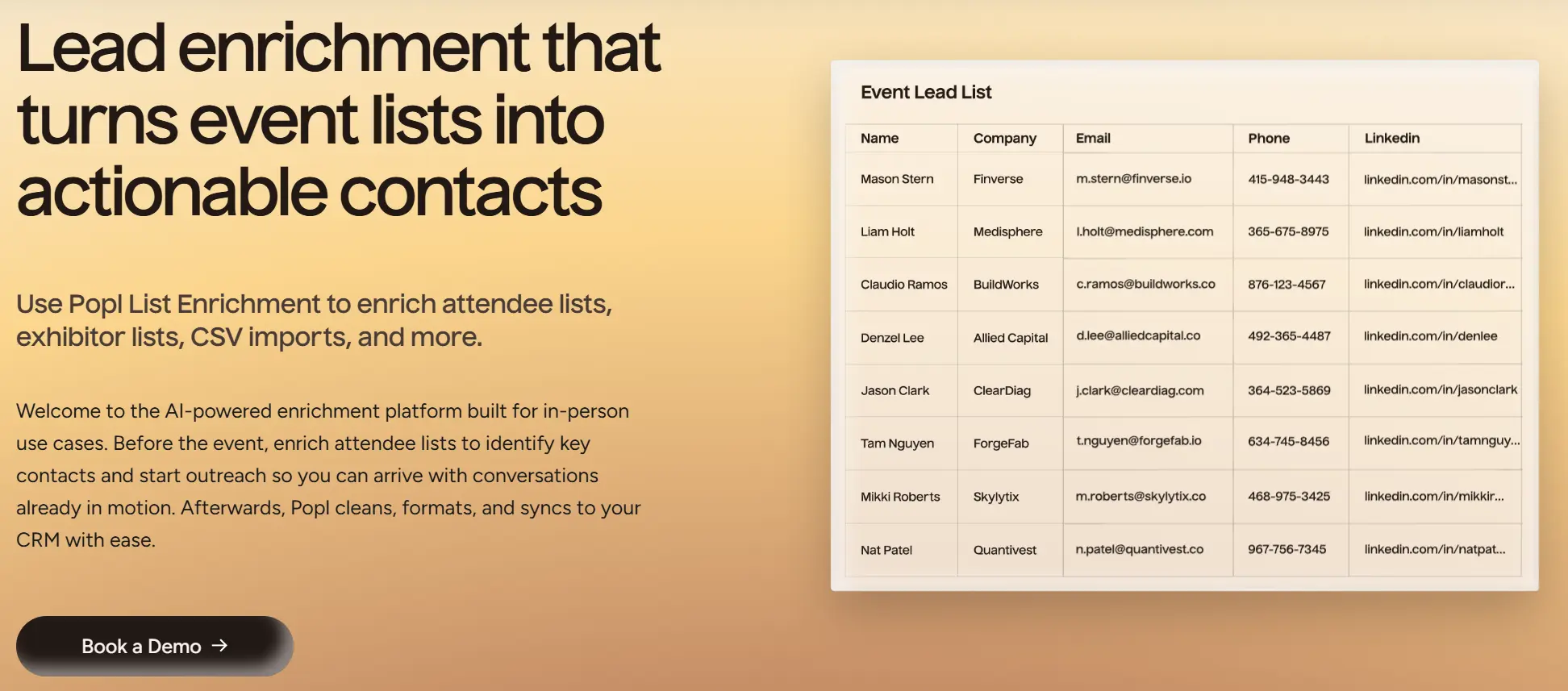
List Enrichment
Popl’s List Enrichment is built for teams that want to prepare before an event and move fast after it. Before the event, teams can enrich attendee lists to identify key contacts and start outreach in advance, so every conversations begin with context.
Digital Business Cards
Popl offers digital business cards as the core entry point into its platform. Customers get a branded digital profile that works across NFC products, QR codes, links, and mobile sharing.
For teams, Popl positions digital business cards as a controlled company asset. Admins manage templates, branding, permissions, and user access from a central dashboard.
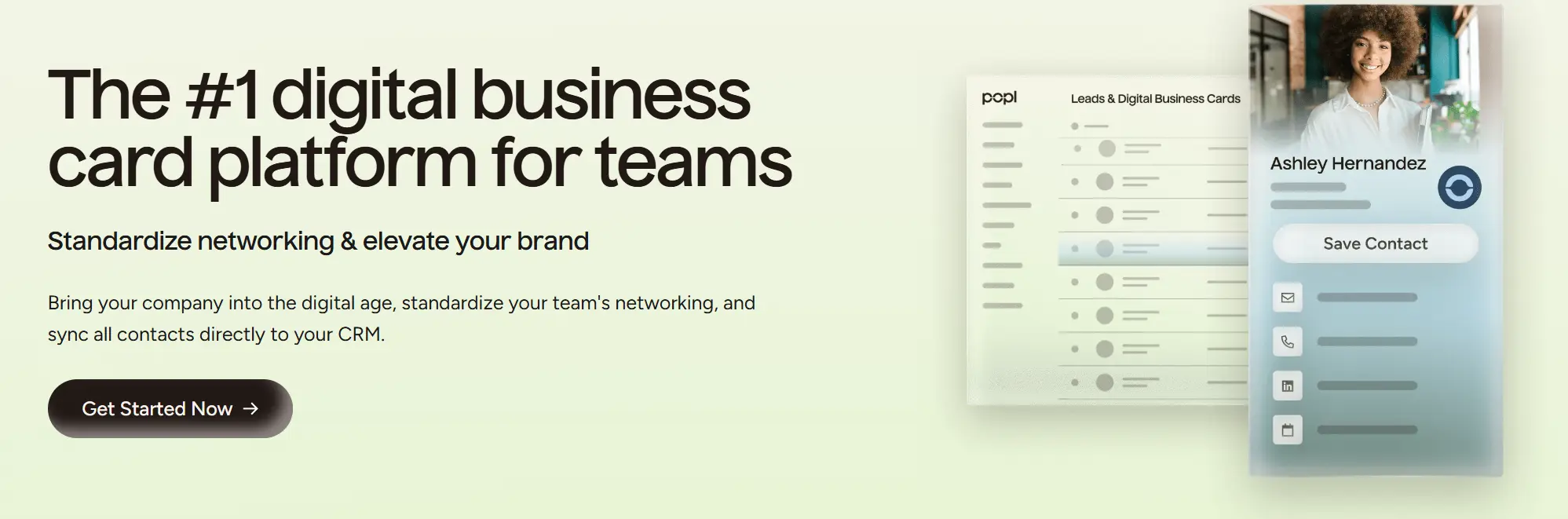
For individuals, the card serves as a flexible profile that can be used across events, meetings, email signatures, and online touchpoints.
Pricing
Popl uses separate pricing for individual users and teams. Software and NFC hardware are billed separately.
Individuals- Free — $0 1 digital card, basic sharing via QR or app
- Pro — $7.99/month Lead capture, up to 3 cards, basic integrations
- Pro+ — $14.99/month Up to 5 cards, advanced analytics, automation, and branding control
- Pricing is custom, based on team size and features
- Small teams typically pay $4–$5 per user/month
- Advanced event features (badge scanning, enrichment) may add usage-based costs
- Standard NFC card: $20–$30
- Premium or custom cards cost more
- Hardware is optional, Popl works without it via QR and links
This pricing model works for teams that capture leads at scale, but cost and complexity are also common reasons people start looking for Popl alternatives. By the way, let’s find out why people move away from the so popular and feature-rich platform.
💡 Check our detailed breakdown of Popl Pricing and understand what each plan offers and where you can overpay
Why People Look for Popl Alternatives
Despite Popl’s strong brand recognition and large customer base, it comes with a set of limitations that push many professionals and companies to explore other options.
I break down the reasons from two perspectives.
- Individual professionals face one set of frustrations when they use Popl on their own.
- Companies and teams encounter a different set of challenges once they roll Popl out across multiple people.
Understanding these gaps helps explain where Popl falls short and why alternatives become more attractive.
Why Individuals Look for a Popl Alternative
Individual professionals often love the concept of a digital business card but discover that Popl’s approach has a few trade-offs for personal use. Here are some reasons an individual might explore other options:
1. Popl Feels Too Complex for Solo UseMany individual users say that Popl works well at first, but the app quickly feels overloaded. Instead of a simple “share my card” experience, users see sections for leads, analytics, campaigns, and upgrades. In live conversations, this complexity slows things down and makes sharing feel less natural.
2. Too Many Steps for the Other PersonA common frustration is the number of steps required to save a new contact's information. After a tap or scan, the recipient often needs to open a profile, find the save option, download a file, and confirm the contact. In fast interactions, those extra steps break the flow and reduce follow-up success.
3. NFC Doesn’t Always Work WellNFC sharing assumes the other person knows how and where to tap. In practice, many recipients hesitate, tap the wrong spot, or feel uncomfortable tapping phones at all. As a result, users often switch to QR codes or links, making the physical Popl card feel less essential over time.
4. Notifications and Automation Feel AnnoyingPopl actively promotes upgrades, features, and engagement through notifications and automated messages. For individuals who prefer a quieter, more personal networking style, these prompts and auto follow-ups feel pushy and distracting.
5. Basic Features Need PaymentMany solo users are surprised by how limited the free plan is. Features such as analytics, multiple cards, branding control, or exporting contacts require a paid subscription. After investing time in setup, hitting these limits often feels frustrating and expensive for individual use.
6. A Physical Card Sometimes UselessNot every professional wants to rely on a physical NFC card. Forgetting it, losing it, or meeting people online makes the hardware useless. This pushes many individuals toward fully digital alternatives that work everywhere without extra accessories.
Why Companies Look for a Popl Alternative
Popl covers basic contact sharing, but team uses cases quickly expose its limitations. This is where companies start exploring alternatives.
1. Costs Add Up at ScalePopl’s per-user pricing looks reasonable at first, but costs rise quickly as teams grow. Add-ons such as advanced lead capture or badge scanning can introduce variable fees, making budgeting harder.
2. Lead Capture Depends on Prospect ActionPopl’s lead capture flow often requires the other person to enter their details on the spot. At busy events, many prospects skip this step. Companies that rely heavily on events sometimes see lower capture rates and look for alternatives that reduce friction during interactions.
3. Limited Branding ControlPopl offers basic branding, but companies can’t fully customize layouts or use custom domains. For teams with strict brand guidelines, this lack of control becomes a limitation. Marketing teams often prefer platforms that offer deeper visual customization or white-label options.
4. Integration and Data Ownership QuestionsPopl integrates with popular CRMs, but some organizations need deeper or more flexible workflows. Others raise concerns about ownership of contact lists when employees leave. Companies with complex data requirements often look for platforms that integrate more closely with their existing systems.
5. Overkill for Some TeamsSmaller teams may find Popl too heavy for their needs, while larger organizations may expect more advanced admin roles, security controls, or audit features.
6. Scalability and Support ExpectationsAs teams grow from dozens to hundreds of users, onboarding, provisioning, and support become critical. Some companies look for alternatives that offer smoother large-scale rollouts, stronger admin tooling, or advanced support.
Popl Alternatives: Quick Comparison
Here I’ll provide a quick comparison table of popular Popl alternatives, highlighting what each platform is about, who it’s best suited for, what team features it offers, and how its pricing model works.
Platform | Short Description | Best For | Team Features | Pricing (Yearly) |
|---|---|---|---|---|
1. DBC: Digital Business Card | Fully digital business card platform with a unique design and insightful analytics | Teams and professionals who want branding, analytics, and event performance control | Admin panel, branded templates, analytics, email signature, virtual background | Individual: $84/year Team: $60 per card/year |
2. Blinq | Digital card app with broad sharing options | Individuals and teams that want full digital flexibility | Team branding, admin control, CRM sync, SSO (Enterprise) | Individual: $88/year Team: $60 per user/year (Lead Capture add-on) |
3. Tapt | NFC business cards with a simple platform | Small teams and entrepreneurs focused on NFC sharing | Team dashboard, templates, CRM integrations | Individual: Free Team: $40 per user/year (5-9 users) |
4. HiHello | App digital business cards with email signatures | Individuals and small teams focused on professional presence | Team directory, signature management, CRM sync | Individual: $72/year Team: $60 per user/year |
5. Wave | Simple digital business cards with optional NFC products | Professionals and growing teams that want a fast setup | Team management, bulk editing, templates | Individual: Free Team: $60 per user/year |
6. V1CE | Premium physical NFC cards with an unlimited-use digital platform | Executives and brand teams | Central admin, shared analytics, flat team pricing | Individual: $93/year Team: $2,316 per year (unlimited users) |
How I Chose These Popl Alternatives
In compiling this list, I evaluated dozens of digital business card platforms, checked reviews on G2 and Trusipilot, scanned every page of websites, and searched for feedback in the Google Play and App Store markets. My goal was to find solutions that offer a better experience and value than Popl for specific use cases with a more attractive price tag.
Here are the main criteria I collected to find the best alternatives to Popl.
- Networking Experience: The alternative must make sharing contact details fast and easy for you and the person you’re connecting with. I looked at how many steps it takes to share and save a contact with each tool. The best platforms support multiple sharing methods and let recipients save your info with minimal steps.
- Individual User Flexibility: I tested how well each tool works for a solo professional using it independently. This includes the setup process, the customization options, and everyday use.
- Team Features: Since a big part of Popl’s appeal is for teams, any alternative for companies must have solid team features. I looked for features such as an admin dashboard, the ability to manage multiple users at once, template cards for the company, permission controls, and analytics.
- Integrations & Workflow: I gave preference to platforms that integrate with popular CRMs (Salesforce, HubSpot, etc.), Zapier or Make for automation, and other tools like Slack or email marketing systems. The ability to capture a lead and have it show up in your CRM without manual work is a big advantage.
- Branding and Customization: I evaluated the degree of branding control each alternative offers and checked if you can customize what information you collect from others.
- Pricing Value: I didn’t simply look for “cheaper than Popl.” Value is about what you get for the price. I compared the features of each platform’s free, middle, and enterprise tiers to Popl’s equivalents. Some alternatives offer more for free, others might charge a similar amount to Popl, but include features by default that Popl would charge extra for.
- Product Development and Support: I gave some weight to how actively each alternative is improving and supporting its product. If users are mentioning regular updates, new features, and responsive support from the company, that’s a good sign this platform will keep up with your needs in 2026 and beyond.
Now let’s get into the detailed reviews of the best Popl alternatives, where I’ll explain how each one compares to Popl and who should consider it.
1. DBC: Digital Business Card - The Best Popl Alternative
DBC: Digital Business Card is a digital business card platform designed with a split between individual and team use cases. The platform centers on unique design templates, easy daily use, and insightful analytics that help you manage leads.
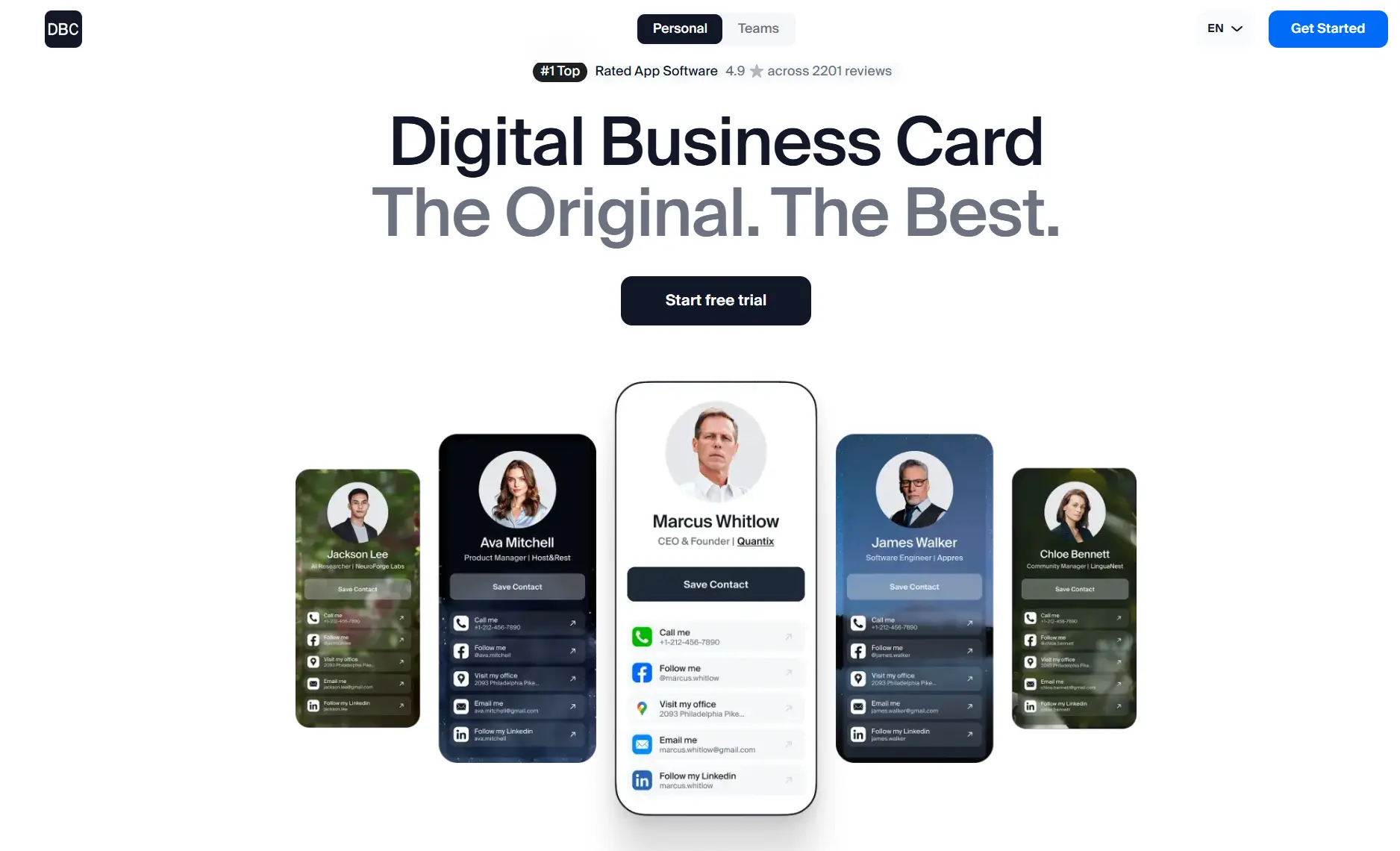
DBC is a nice Popl alternative because it removes extra steps at the moment when you need networking fast. Interaction analytics and the AI-powered business card scanner support follow-up work without breaking the networking moment.
One more significant advantage over Popl is that you can customize the design and use analytics without paying extra for basic functionality. In general, DBC covers the same core networking scenarios as Popl, but with fewer actions and a shorter path from first contact to follow-up.
Best For:
DBC works best for professionals and teams that care about branding and measurable networking results. It fits individuals who want a visually strong digital card and still understand how their networking performs through analytics.
For companies, DBC suits teams that need consistent branding, centralized management, and visibility into how digital cards perform at events and meetings. It’s a strong choice for sales teams, agencies, consulting firms, and growing companies that want structure without slowing everyday networking down.
Pricing:
- Individual plan: $6.99 per user/month, billed annually. Full access from day one — analytics, AI scanner, unlimited cards.
- Business plan for teams starts at $4.99 per card per month when billed annually, with a 30-day team trial.
- Enterprise pricing is custom.
Why Individuals Choose DBC Over Popl
Reasons | Why it matters |
|---|---|
1. Fewer steps to save contacts | With Popl, saving a contact can take extra actions. With DBC, it takes fewer taps, so people save their contacts faster. |
2. Easier to use every day | Popl shows many sections and options that solo users don’t always need. DBC offers easy to use app with an intuitive UI. |
3. Works without NFC problems | Popl often depends on tapping phones with NFC, which doesn’t always work. DBC works through links and QR codes that open instantly. |
4. Analytics without add-ons | Popl gates advanced analytics behind higher tiers. DBC includes analytics in the Individual plan, so you see views and clicks from day one. |
5. Unique design with 30+ templates | Popl offers limited themes that look similar. DBC gives you 30+ design templates, so your card can actually look different and match your style. |
DBC: Digital Business Card combines unique design, advanced analytics, and lead capture to help individuals use digital business cards as a practical networking tool.
Why Teams Choose DBC Over Popl
Reasons teams leave Popl | What teams get with DBC instead |
|---|---|
1. Popl becomes expensive as teams grow | DBC uses simple per-user pricing without usage fees. Teams know the cost upfront and don’t worry about badge scans or feature add-ons increasing the bill. |
2. Popl’s lead capture depends on prospect actions | DBC focuses on fast card sharing and follow-up tracking, without forcing prospects to fill forms on the spot. Teams avoid losing leads due to friction during conversations. |
3. Popl offers limited control over branding | DBC lets teams apply one branded template to everyone and update it centrally. Cards stay consistent without manual edits or exceptions. |
4. Popl is hard for everyday use | DBC keeps the workflow focused on sharing and tracking cards. Employees don’t need to learn campaigns, prompts, or extra tools to do their job. |
5. Popl has unclear visibility into individual activity | DBC shows simple per-employee stats, so managers see who actively networks and where results come from. |
6. Popl provides concerns about CRM workflows | DBC connects cards directly to CRM systems as part of the team setup. Leads flow into existing pipelines without add-ons or manual exports. |
For teams, DBC: Digital Business Card provides a structured way to manage digital business cards at scale. Centralized branding, defined access control, detailed analytics, and CRM integrations help teams improve connections, stay consistent, and track results from all networking activities.
2. Blinq
Second in our list is Blinq — a digital business card platform built around flexible sharing. You can share your card via QR code, links, SMS, email, Apple Wallet, Google Wallet, widgets, and Apple Watch, so you always have a working option at hand.
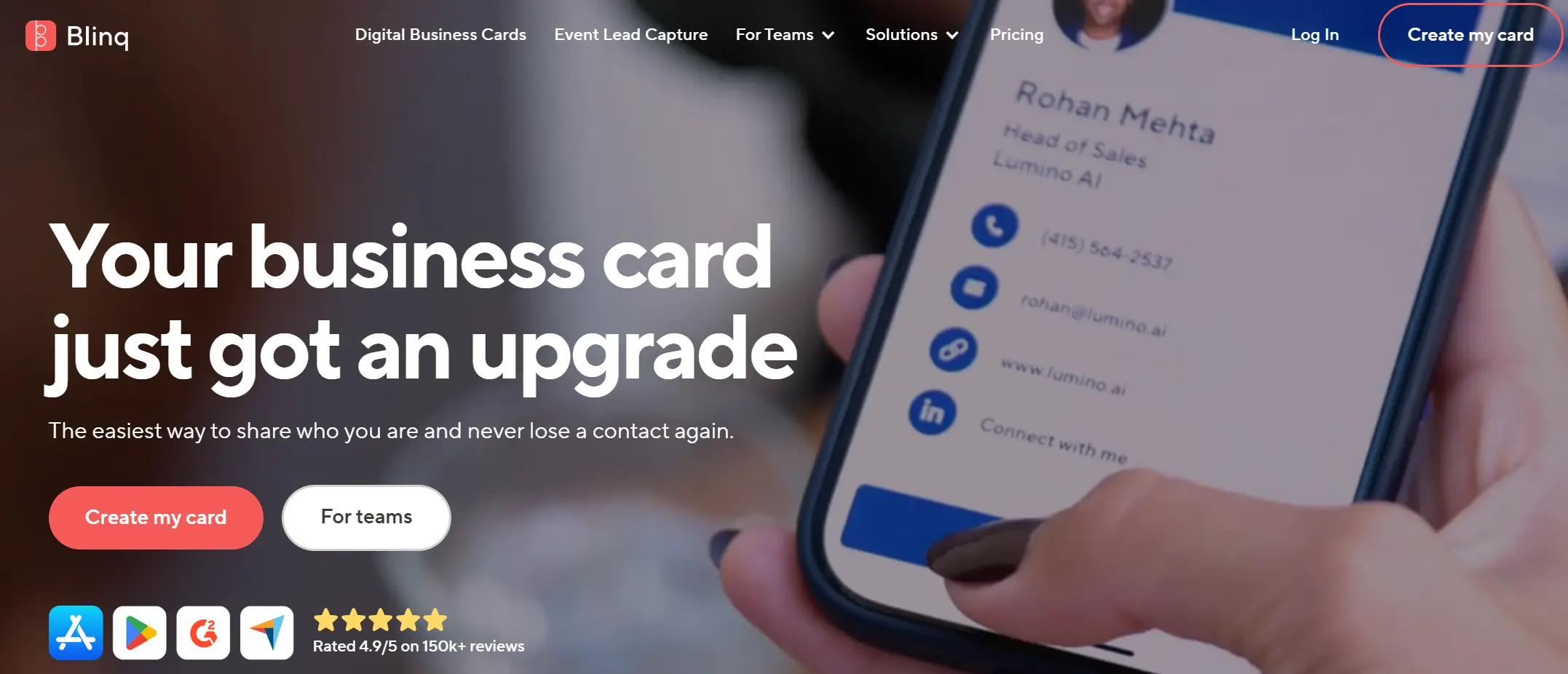
Blinq works as a strong Popl alternative because it solves two common Popl problems: pricing pressure and “too many steps” in day-to-day use. You can start on Blinq for free, share without limits, and only pay when you actually need analytics, advanced scanning, or deeper controls.
Blinq also fits teams that want structure without event workflows. Your company can roll out branded templates, lock fields, manage users, and even keep a shared contact space, so contacts stay inside the company instead of getting lost across personal accounts.
Best For:
Blinq works best for professionals who want a flexible digital card they can share from phone, watch, or wallet without relying on NFC.
It fits teams that want branded cards, admin control, and CRM sync with predictable per-user pricing, especially in hybrid and remote setups.
Pricing:
Blinq offers a tiered pricing model for individuals and teams:
- Free: Create and share digital business cards with unlimited fields and unlimited shares.
- Premium (individual): $7.33 per month billed annually or $9.99 per month billed monthly.
- Business (team): $4.99 per month per card billed annually, minimum 5 cards, or $6.99 per month per card billed monthly, minimum 5 cards
- Enterprise: Custom pricing with advanced features.
Why Individuals Choose Blinq Over Popl
Reasons | Why it matters |
|---|---|
1. Fewer steps | Popl often adds extra screens during sharing. Blinq opens a simple web page with a one-tap save, so contacts get saved faster. |
2. Easier to use every day | Popl feels overloaded for solo users. Blinq keeps the app focused on sharing and contact management. |
3. Works without NFC problems | Popl relies heavily on NFC tapping. Blinq works smoothly through QR codes, links, and wallet passes. |
4. You can test before paying | Popl limits serious use on free plans. Blinq’s free tier stays usable, so individuals can decide later. |
5. Flexible card appearance | Popl cards look similar. Blinq allows multiple cards and visual flexibility without buying hardware. |
Blinq works well for individuals who want a rich free plan and flexible sharing across different channels, then upgrade for export, scanners, and deeper customization when needed.
Why Teams Choose Blinq Over Popl
Reasons teams leave Popl | What teams get with Blinq instead |
|---|---|
1. Popl becomes expensive as teams grow | Blinq uses flat per-user pricing without usage-based fees. |
2. Popl’s lead capture depends on prospect actions | Blinq focuses on fast sharing and internal contact management. |
3. Popl offers limited control over branding | Blinq provides templates and field locking across the team. |
4. Popl is hard for everyday use | Blinq keeps workflows simple, so employees adopt it faster. |
5. Popl has unclear visibility into individual activity | Blinq adds shared contacts and admin-level oversight. |
6. Popl creates concerns about CRM workflows | Blinq includes CRM integrations in the standard team plan. |
Teams choose Blinq when they need consistent branding, admin editing, and CRM sync, with options to connect onboarding and access to existing IT systems as the rollout grows.
3. Tapt
Next on the list is Tapt — a digital business card platform built around fast NFC sharing and very low ongoing costs. The core idea is that you buy a physical NFC card once and keep using it to share your contact information.
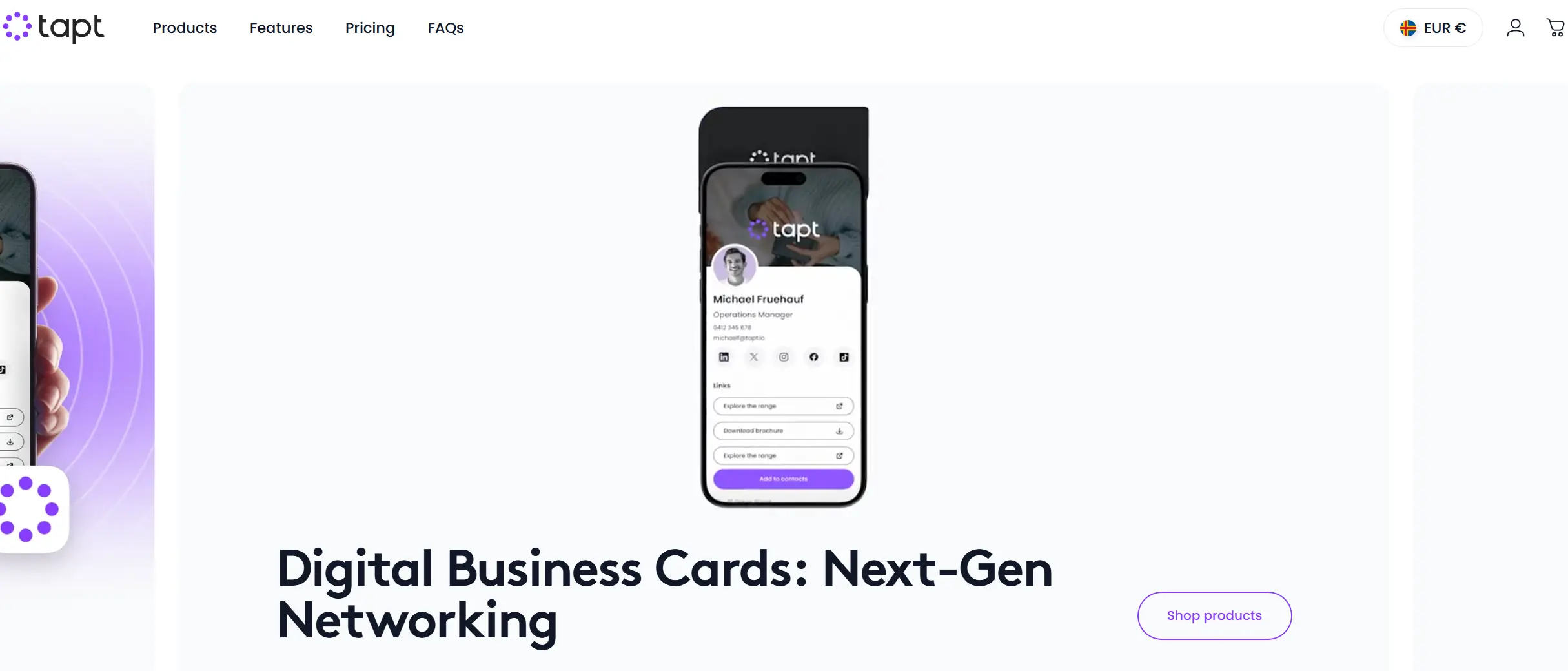
Tapt works as a Popl alternative for people who get tired of per-user pricing and locked features. Instead of paying every month, you pay for the card and use the platform either for free or with a small yearly fee. Sharing stays focused on tap-and-save without extra screens or complicated flows.
Teams can manage cards from one place, reassign them when employees leave, and keep branding consistent.
Best For:
Tapt fits real estate agents, consultants, founders, and freelancers who want a premium-looking NFC card they can use for years without paying monthly.
For companies, Tapt suits small and mid-sized teams that want digital cards at scale with minimal software overhead. It’s a strong choice for teams that mainly need fast contact sharing and basic lead capture.
Pricing:
Tapt uses a flat, hardware-first pricing model:
- 1–4 users: $0 platform fee. Pay only for NFC cards.
- 5–9 users: $40 per year total.
- 10–24 users: $80 per year total.
- 25+ users: Custom pricing.
- Enterprise: Custom pricing with SSO and advanced controls.
NFC cards are purchased separately, usually at $40–$65 per card, depending on the material.
Why Individuals Choose Tapt Over Popl
Reasons | Why it matters |
|---|---|
1. No monthly subscription | Popl charges per month. Tapt works after a one-time card purchase. |
2. Faster sharing | Tapt focuses on tap-and-save without extra screens or prompts. |
3. Two-way contact exchange | Contacts get shared both ways by default without a paid add-on. |
4. Works well with physical cards | Tapt feels natural for people who still value a physical card. |
5. Direct link mode | You can share one specific link instead of a full profile. |
Tapt fits individuals who want digital benefits without committing to another subscription.
Why Teams Choose Tapt Over Popl
Reasons teams leave Popl | What teams get with Tapt instead |
|---|---|
1. Popl becomes expensive as teams grow | Tapt uses flat yearly pricing for small teams. |
2. Popl pushes complex workflows | Tapt keeps sharing simple and predictable. |
3. Popl ties cards to users | Tapt lets companies reassign cards when people leave. |
4. Popl focuses on event-heavy use | Tapt works better for daily meetings and client visits. |
5. Popl requires ongoing licenses | Tapt minimizes recurring costs long-term. |
For teams, Tapt offers a practical way to deploy digital business cards without locking the company into per-user SaaS pricing.
4. HiHello
HiHello is a digital business card platform focused on professional presence across multiple channels. It combines digital business cards with email signatures, virtual backgrounds, and a built-in contact manager, so your contact details stay consistent wherever you interact.
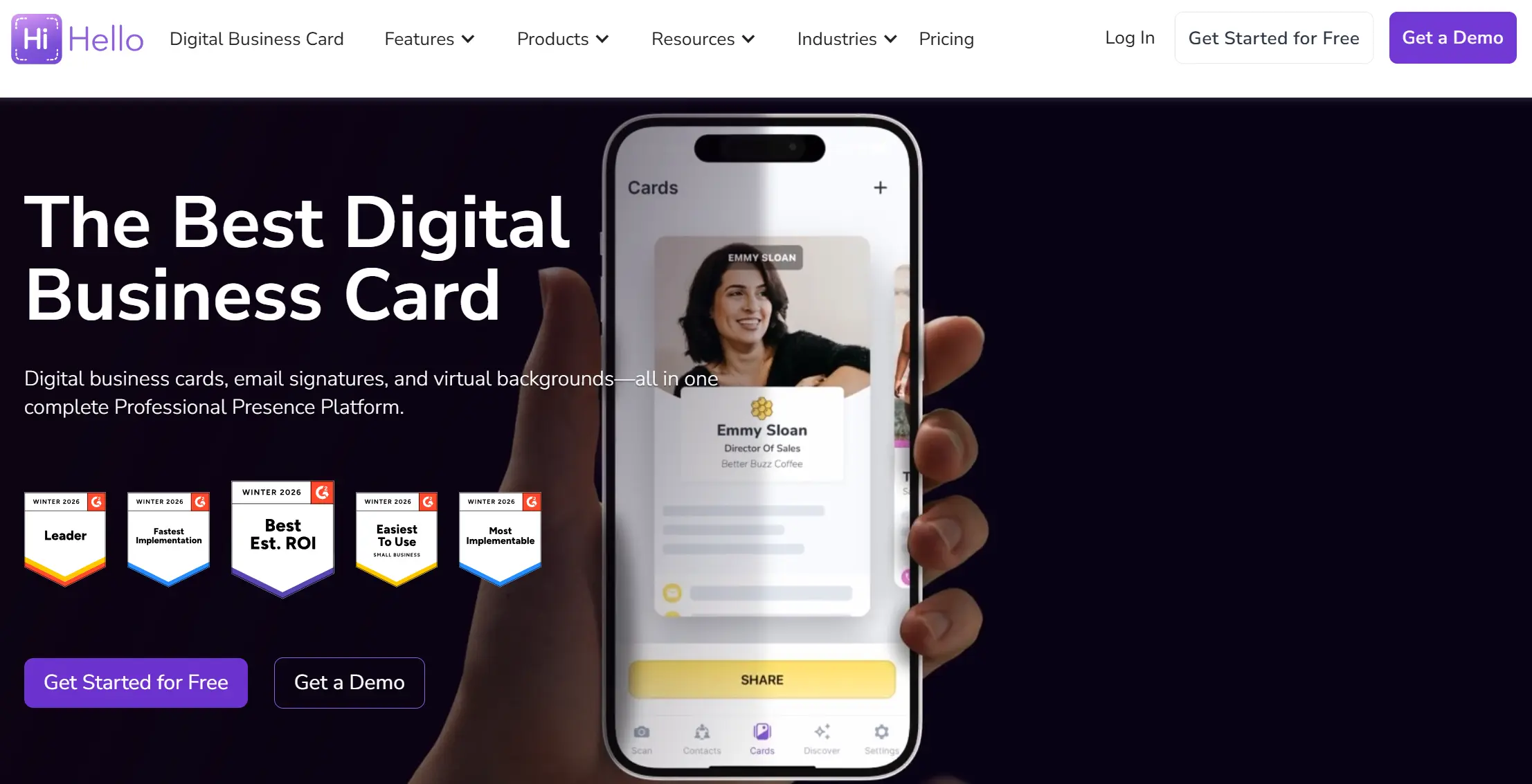
HiHello works as a Popl alternative for people who care more about everyday professional visibility than event lead capture. Instead of centering everything around NFC taps, HiHello focuses on software sharing that works equally well in emails, meetings, and video calls.
For teams, HiHello appeals to companies that want consistent branding across cards, email signatures, and internal directories, without introducing complex event workflows or hardware dependencies.
Best For:
HiHello works best for professionals who want a polished digital identity for emails, video calls, and in-person meetings.
It fits teams that care about brand consistency, centralized signature management, and internal directories, especially in consulting, real estate, finance, and service businesses.
Pricing:
HiHello uses simple per-user pricing for individuals and teams:
- Free: 1 digital business card with basic sharing.
- Professional (individual): $6 per month billed annually or $8 billed monthly.
- Business (team): $5 per user per month, billed annually or $6 billed monthly.
- Enterprise: Custom pricing with advanced controls.
Why Individuals Choose HiHello Over Popl
Reasons | Why it matters |
|---|---|
1. More ways to share | Popl focuses on NFC and QR. HiHello works through QR, email, text, wallet, watch, and video calls. |
2. Email signatures included | HiHello turns your card into a live email signature that updates automatically. |
3. Works fully without hardware | Popl pushes NFC devices. HiHello works entirely as a software app. |
4. Easier for online networking | HiHello fits email and video meetings better than event-driven tools. |
5. Built-in contact organization | HiHello stores contacts with notes and tags, not just raw leads. |
HiHello works well for individuals who network across email, Zoom, and meetings and want their contact info to stay consistent everywhere.
Why Teams Choose HiHello Over Popl
Reasons teams leave Popl | What teams get with HiHello instead |
|---|---|
1. Popl focuses on events | HiHello focuses on everyday professional presence. |
2. Limited control over email signatures | HiHello centrally manages email signatures for the whole team. |
3. No internal directory | HiHello creates a built-in employee directory. |
4. Popl feels heavy for non-sales teams | HiHello stays simple and easy to adopt. |
5. Branding only on cards | HiHello applies branding to cards, emails, and virtual backgrounds. |
6. Feature tiers feel fragmented | HiHello includes most features in one team plan. |
For teams, HiHello provides a structured way to manage digital cards, email signatures, and internal visibility from one platform.
5. Wave
Next Popl alternative is Wave, a digital business card platform focused on simplicity and visual presentation. Wave combines digital cards with optional premium NFC products and gives users access to lead capture and analytics, even on the free plan.
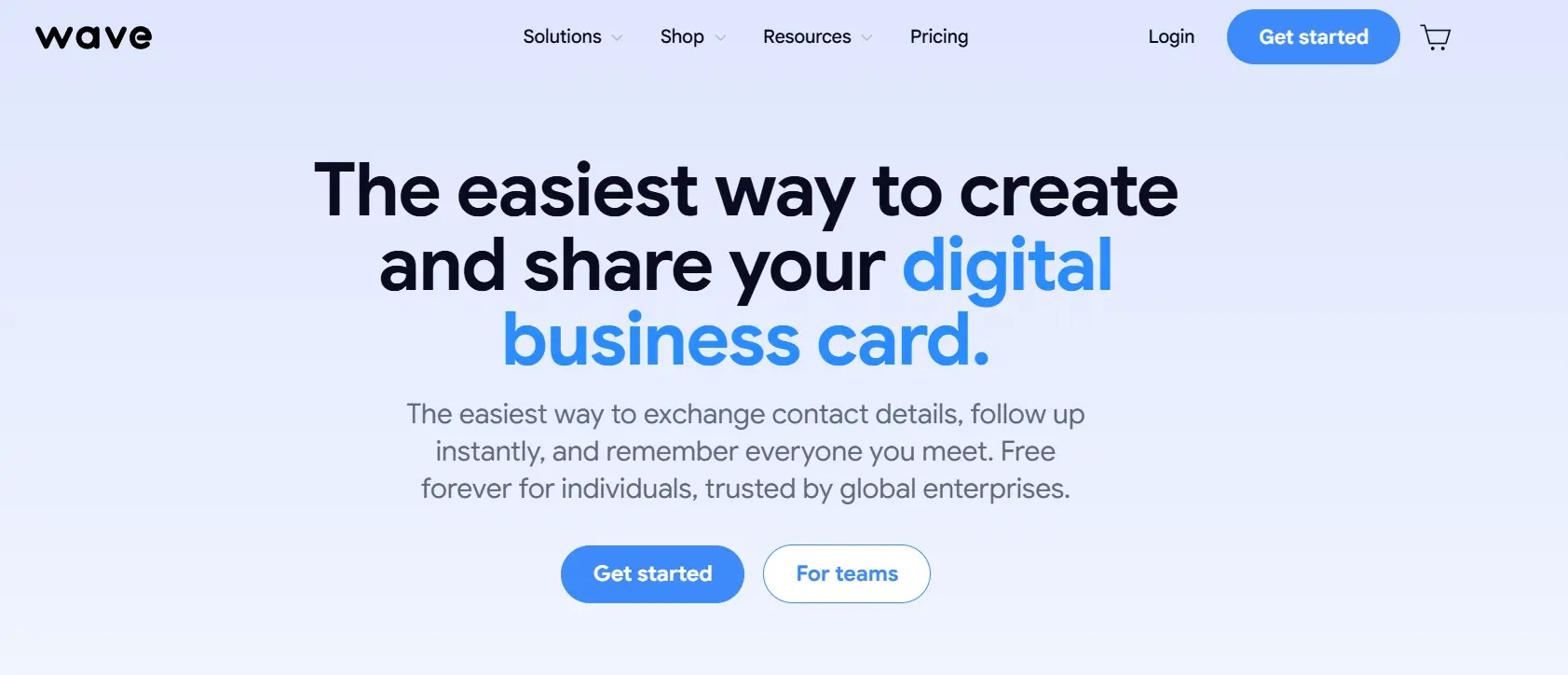
Wave works for people who want fewer limits on the free tier and a calmer daily experience. Instead of pushing upgrades early, Wave lets individuals and teams use core features first and decide later if they need more.
For teams, Wave appeals to companies that want easy rollout, centralized control, and predictable pricing, without complex event workflows or feature gating.
Best For:
Wave works best for professionals who want a simple digital card that looks good and works without lags.
It fits teams that need basic admin control, shared contacts, and analytics, but want a solution that employees adopt quickly without training.
Pricing:
Wave uses a straightforward pricing model:
- Free: 1 digital card, unlimited sharing, lead capture, basic analytics.
- Pro (individual): around $7 per month billed annually.
- Teams: around $5 per user per month, billed annually, minimum 3 users.
- Enterprise: Custom pricing.
Why Individuals Choose Wave Over Popl
Reasons | Why it matters |
|---|---|
1. More features on the free plan | Popl limits lead capture and analytics on free plans. Wave includes them from day one. |
2. Easier first experience | Wave sets up fast and stays simple without extra screens or flows. |
3. Reliable sharing options | Wave works through QR, links, wallet cards, and NFC without forcing one method. |
4. Premium physical cards | Wave offers bamboo and metal cards for people who care about physical impressions. |
5. Analytics without a paywall | Wave shows engagement stats even before upgrading. |
Wave works well for individuals who want to start free, see real value, and avoid subscription pressure.
Why Teams Choose Wave Over Popl
Reasons teams leave Popl | What teams get with Wave instead |
|---|---|
1. Popl feels heavy for daily use | Wave keeps workflows focused on sharing and contacts. |
2. Popl pushes upgrades early | Wave allows teams to use core features before paying. |
3. Branding feels limited | Wave offers templates and locked fields on team plans. |
4. Leads get scattered | Wave provides centralized contact management for teams. |
5. Admin tools feel complex | Wave offers simple bulk edits and user management. |
6. Event features go unused | Wave focuses on everyday networking instead of events. |
6. V1CE
V1CE is a digital business card platform built around premium physical NFC cards and fixed pricing. V1CE focuses on in-person networking with a cool first impression and on teams that want predictable costs instead of per-user subscriptions.
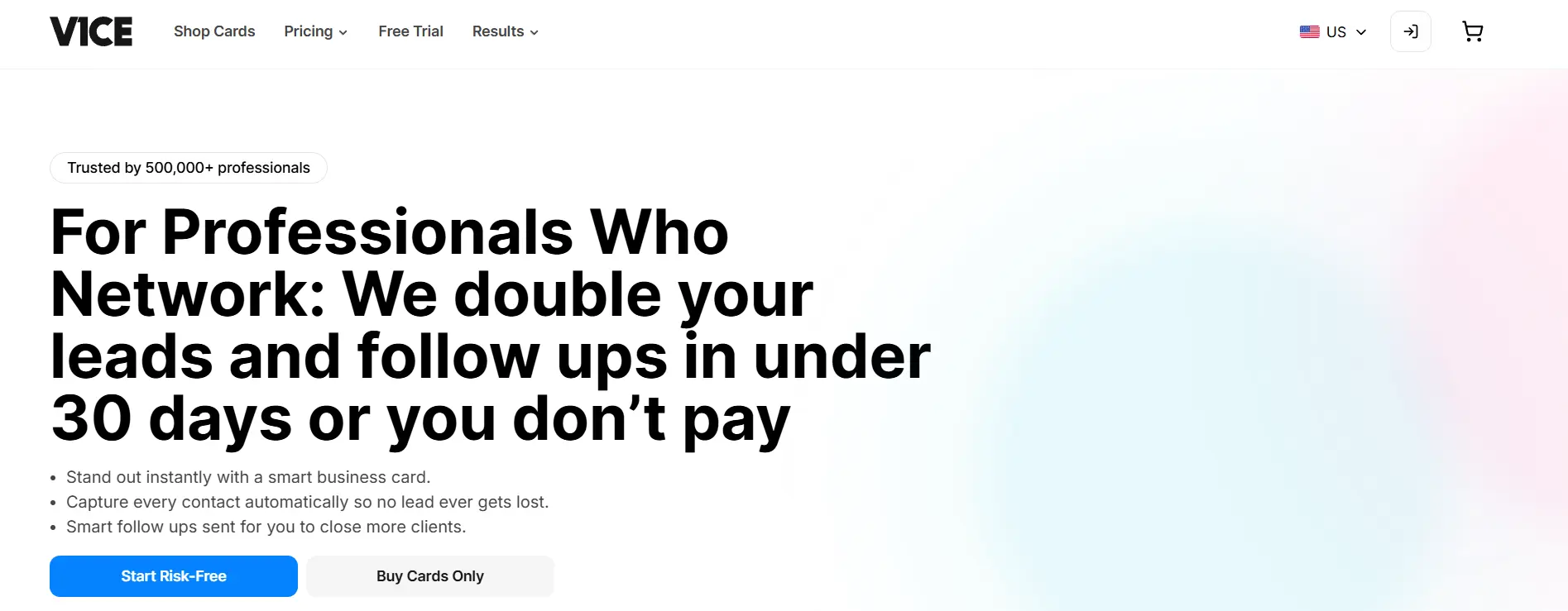
It works as a Popl alternative for people and companies who want strong lead capture and automation without paying for every new user. Instead of scaling costs with headcount, V1CE offers a flat monthly plan that covers unlimited users.
For teams, V1CE appeals to companies that want to roll out digital business cards to everyone at once, keep branding consistent, and automate follow-ups, without worrying about growing software bills.
Best For:
V1CE works best for professionals who care about visual impact and lead capture in face-to-face meetings.
It fits sales teams, real estate companies, agencies, and event businesses that want premium NFC cards, automated follow-ups, and predictable pricing at scale.
Pricing:
V1CE uses a mixed pricing model:
- Free: 1 basic digital card.
- Plus (individual): Paid monthly plan with lead capture, analytics, and unlimited digital cards.
- Plus Unlimited (team): Around $193 per month for unlimited users.
- Enterprise: Custom pricing with advanced controls.
The key differentiator is the flat unlimited team plan.
Why Individuals Choose V1ce Over Popl
Reasons | Why it matters |
|---|---|
1. Premium physical cards | V1CE focuses on metal and high-end cards that make a strong first impression. |
2. Built-in lead capture | Every card includes a contact form, so meetings turn into saved contacts. |
3. Automatic follow-ups | V1CE can send emails or messages after contact exchange without manual work. |
4. Multiple profiles | One card can switch between different digital profiles when needed. |
5. Wallet sharing | Cards work through Apple Wallet and Google Wallet as a backup to NFC. |
V1CE suits individuals who want networking to feel polished and automated without extra effort.
Why Teams Choose V1ce Over Popl
Reasons teams leave Popl | What teams get with V1CE instead |
|---|---|
1. Popl pricing grows with team size | V1CE offers one flat price for unlimited users. |
2. Popl’s per-seat licensing limits rollout | Teams can give cards to everyone without cost debates. |
3. Popl’s manual follow-ups take time | V1CE automates first follow-up messages after contact exchange. |
4. Hardware feels optional | V1CE makes premium NFC cards a core part of the experience. |
5. Popl costs become hard to forecast | V1CE pricing stays stable as the company grows. |
For teams, V1CE provides a scalable way to equip the entire organization with digital business cards, automate lead follow-ups, and keep costs predictable over time.
Which Popl Alternative Is Best for You?
To help you choose the best Popl alternative for your case, I divided them into different scenarios. They match how people choose a platform after they try Popl for a week.
Solo users
“I want a free digital business card that still looks professional.”Pick Blinq or HiHello. Both let you start at $0 and share instantly via QR codes and links, so you get value before you ever consider a subscription.
“I’m fine paying a few dollars a month if I get better features.”Pick HiHello or Wave, and look at DBC if you care a lot about how the card looks. HiHello gives you extra presence tools like email signatures and virtual backgrounds, Wave keeps things simple and still gives you strong functionality for the price, and DBC pushes hard on unique design and the overall card experience.
“First impression matters more than anything.”Pick Wave, DBC, or V1CE. Wave wins if you want a premium physical card option, DBC wins if you want your digital page to look unique, and V1CE wins if you want a luxury NFC card vibe that feels executive.
“I want to know when to follow up.”Pick DBC or HiHello, and keep Popl if events generate most of your leads. DBC fits analytics follow-up across meetings and day-to-day sharing, HiHello fits people who share through email and online channels, and Popl fits trade shows where scans and event attribution drive the workflow.
Small teams
“We need team cards on a tight budget.”Pick Blinq, DBC, or HiHello. They sit in the same price range per user and include templates, admin controls, and CRM sync.
“We want our small team to look bigger than it is.”Pick DBC, HiHello, or V1CE. DBC helps you ship a strong branded look fast, HiHello extends that look into signatures and meeting backgrounds, and V1CE gives you the premium NFC card impression that can change how clients perceive your company.
“We go to events, and we must capture leads fast.”Pick Popl, DBC, or Tapt. Popl fits teams that want the full event toolkit, DBC fits teams that care about follow-up tracking and rep performance, and Tapt fits teams that want fast tap-to-share with low ongoing costs.
Growing companies
“We need to onboard 50, 100, 500 employees without chaos.”Pick HiHello or DBC. They work well when you need centralized control, templates, and enterprise rollout features as your org grows.
“We want ROI. We need a tracking system we can use.”Pick DBC and keep Popl on the shortlist if events drive pipeline. DBC fits companies that want visibility and measurable outcomes across the whole team, and Popl fits companies that attribute results to conferences and scans.
“We want to track each employee’s results.”Pick DBC, Popl, or Wave. DBC focuses heavily on per-employee analytics, Popl fits teams measuring event activity, and Wave fits teams that want a lighter system with analytics at a lower cost.
Final Word
Choosing a Popl alternative starts with one simple question: how does networking happen in your situation?
Some people share contacts a few times a month and want something simple that opens fast and looks good. Others network daily, attend events, or work in sales and need structure, tracking, and follow-up support. Teams usually care about ownership, branding, and visibility across everyone who represents the company.
The right choice depends on a few practical things you already know about your work:
- How often do you exchange contacts
- Where those interactions happen: meetings, events, email, calls
- Whether follow-ups matter for your results
- Who should keep and manage the contacts long-term
Most platforms let you try them without commitment. Use that time to see how sharing feels in conversations and whether the follow-up actually gets easier.
We recommend learning more about Digital Business Cards for Companies to see how team management, analytics, and branding work together in networking scenarios.
FAQ
Why do people look for Popl digital business card alternatives?
Are there free Popl alternatives worth using?
What is the best Popl alternative for teams?
Is Popl still worth it compared to its alternatives?
What is the best Popl alternative for design and branding?
Which Popl alternative works best without NFC cards?

A content writer with over 8 years of experience creating analytical content for digital products and B2B SaaS companies. His work focuses on practical guides, pricing breakdowns, and comparisons that help teams evaluate costs, features, and differences between tools.
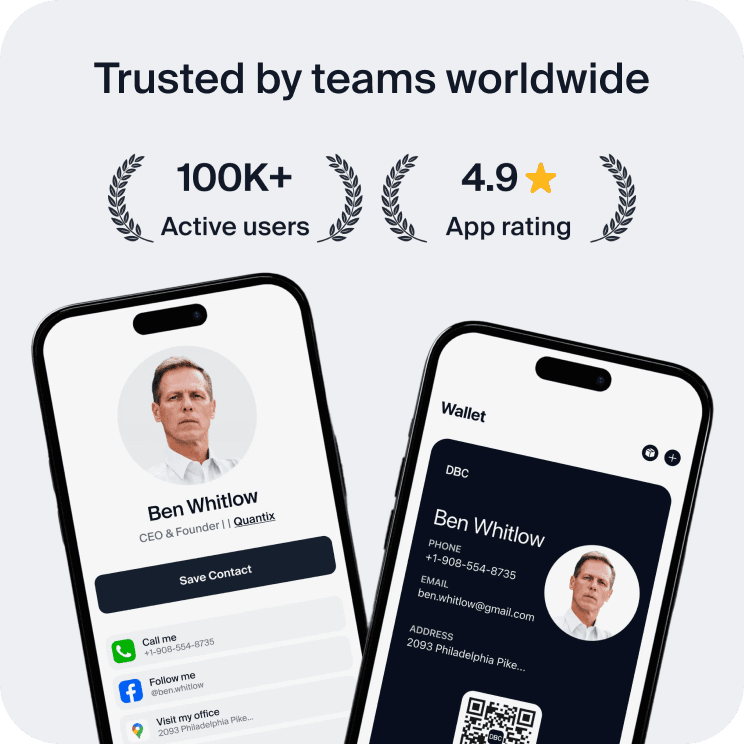
Your first impression decides everything
- Look professional and build trust instantly
- Forget about reprints and lost contacts
- Update your details anytime
 Get Started Today